Hey there, folks! I’m in the conveyor chain game, and one question I get asked a lot is, "What’s the difference between single-strand and multi-strand conveyor chains?" Well, let’s dive right in and break it down. Conveyor Chain

Construction and Appearance
First off, let’s talk about how these chains look. Single-strand conveyor chains, as the name suggests, are just one continuous row of chain links. They’re pretty straightforward. You’ve got the inner plates, the outer plates, the pins, and the bushings all lined up in a single line. It’s like a long, skinny loop.
On the other hand, multi-strand chains are made up of two or more single strands running side by side. They’re connected together by the pins, so they move in unison. Visually, they look wider and bulkier compared to single-strand chains. It’s like a thicker belt of chain links.
Strength and Load Capacity
One of the biggest differences between the two is their strength and load capacity. Single-strand chains have a certain limit to how much weight they can handle. They’re great for lighter-duty applications where you don’t need to move extremely heavy loads. For example, in a small parts assembly line where you’re just moving small components from one station to another, a single-strand chain will do the job just fine.
Multi-strand chains, however, are designed for heavy-duty applications. Because they have multiple strands working together, they can distribute the load more evenly. This means they can handle much heavier weights. Think about a large-scale manufacturing plant where they’re moving industrial equipment or big batches of products. A multi-strand chain would be the way to go here. If you slap a single-strand chain in that kind of situation, it’s likely to break under the stress pretty quickly.
Speed and Efficiency
When it comes to speed, single-strand chains can generally operate at higher speeds. Since they’re lighter and have less mass, there’s less inertia to overcome. This makes them ideal for applications where you need a fast conveyor system, like in a high-speed bottling line. The bottles need to move quickly from one area to another, and a single-strand chain can keep up with that pace.
Multi-strand chains, on the other hand, are a bit slower. The extra weight and bulk mean that they take more energy to get moving and to stop. But they make up for it in terms of efficiency. They can move more material in one go because of their higher load capacity. So, in a situation where you’re dealing with a large volume of heavy materials, the slower speed of a multi-strand chain is worth it for the overall efficiency.
Cost
Cost is always a factor when choosing a conveyor chain. Single-strand chains are usually cheaper to buy. They use less material and are simpler to manufacture. This makes them a great option for small businesses or applications where you’re on a tight budget.
Multi-strand chains, however, are more expensive. The additional strands and the more complex manufacturing process drive up the cost. But you’ve got to think about the long term. If you need a chain that can handle heavy loads and last a long time, the extra investment in a multi-strand chain might be worth it. You’ll save money in the long run by not having to replace a single-strand chain that keeps breaking under the stress.
Maintenance
Maintenance is another important aspect. Single-strand chains are relatively easy to maintain. They’re simpler in design, so it’s easier to spot any problems. If a link breaks, it’s usually a quick fix to replace just that one link. And because they’re lighter, they put less stress on the sprockets and other components of the conveyor system.
Multi-strand chains require a bit more maintenance. The extra strands mean there are more parts that can wear out or break. You’ve got to make sure all the strands are running smoothly and evenly. If one strand starts to have problems, it can throw off the whole chain and cause damage to the sprockets. But with proper maintenance, a multi-strand chain can last a long time and keep your conveyor system running efficiently.
Applications
Each type of chain is suited to different applications. Single-strand chains are commonly used in food processing plants. They’re ideal for moving small food items like snacks or fruits along the production line. They’re also used in packaging industries, where they help move boxes and packages from one point to another.
Multi-strand chains are used in heavy industries like mining and steel production. They can handle the massive loads of ore, coal, or steel products that need to be transported. They’re also used in automotive manufacturing plants, where they move large car parts down the assembly line.
Which One Should You Choose?
So, how do you decide which chain is right for your application? Well, it all comes down to your specific needs. If you’ve got a light-duty application with a tight budget and you need a fast conveyor system, a single-strand chain is probably the way to go. But if you’re dealing with heavy loads and you need a chain that can stand up to the stress, then a multi-strand chain is the better choice.
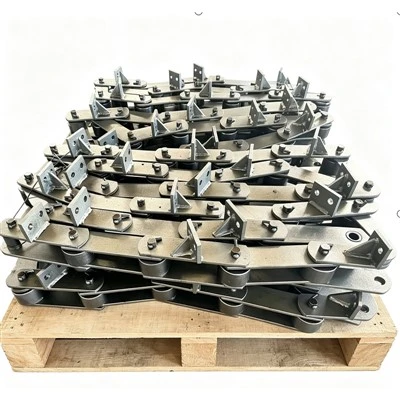
As a conveyor chain supplier, I’ve seen all kinds of applications. I’ve worked with small businesses looking for an affordable solution and large corporations in need of a heavy-duty chain. I can help you figure out which chain is best for your situation. Whether you need advice on the right chain type, the correct size, or how to install and maintain it, I’m here to help.
Rack If you’re in the market for a conveyor chain, don’t hesitate to reach out. We can have a chat about your requirements and see what I can do to get you the best chain for your money. Let’s work together to keep your conveyor system running smoothly and efficiently.
References
- "Conveyor Chain Handbook" – A comprehensive guide on different types of conveyor chains and their applications.
- "Industrial Conveyor Systems: Design and Operation" – This book provides in – depth knowledge about the design and functionality of conveyor systems, including the role of single – strand and multi – strand chains.
- Industry reports from leading conveyor chain manufacturers and trade associations, which offer real – world insights into the performance and usage of these chains.
Anhui Huihuang Chain Transmission Co., Ltd.
Anhui Huihuang Chain Transmission Co., Ltd. is one of the most professional conveyor chain manufacturers and suppliers in China, also supports high quality customized service. Please feel free to buy discount conveyor chain made in China here from our factory. Welcome to contact us for pricelist and free sample.
Address: NO.3 YONGQIANG ROAD. JIXI.ANHUI.CHINA
E-mail: 754590660@qq.com
WebSite: https://www.hhchains.com/
