Fluorescence spectroscopy is a powerful analytical technique that has found widespread applications in many fields, including bio – chemistry, medicine, environmental science, and materials science. It relies on the emission of fluorescence from a sample after being excited by light. The choice of optical components, such as gratings, plays a crucial role in the performance of a fluorescence spectrometer. As a supplier of broadband infrared gratings, I often get asked whether our broadband infrared gratings can be used in fluorescence spectroscopy. In this blog, I will explore this question in detail. Broadband Infrared Grating

Understanding Fluorescence Spectroscopy
Before delving into the use of broadband infrared gratings in fluorescence spectroscopy, it’s essential to understand the basic principles of fluorescence spectroscopy. When a molecule absorbs light at a specific wavelength, it is excited from its ground state to an excited state. The excited molecule then rapidly undergoes vibrational relaxation and non – radiative processes, and finally emits a photon as it returns to the ground state. This emitted light, called fluorescence, has a longer wavelength (lower energy) than the exciting light.
A fluorescence spectrometer typically consists of an excitation source, a sample holder, a monochromator for selecting the excitation wavelength, and another monochromator or a detector for analyzing the emitted fluorescence. The monochromators are key components that rely on gratings to disperse light and select the desired wavelengths.
Characteristics of Broadband Infrared Gratings
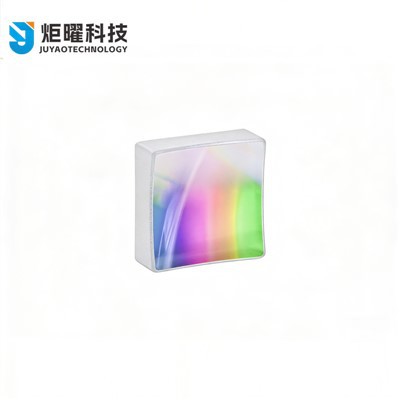
Broadband infrared gratings are designed to cover a wide range of infrared wavelengths. They are characterized by high diffraction efficiency across a broad spectral range, which allows for efficient light dispersion. These gratings can be blazed at specific wavelengths to optimize performance at those regions, but still maintain good overall performance across the entire broadband of interest.
The manufacturing process of broadband infrared gratings involves precision engineering to ensure uniform groove profiles and high – quality surface finishes. This results in gratings that can handle different types of light sources and can be used in a variety of optical setups.
Potential Use in Fluorescence Spectroscopy
Wavelength Coverage
One of the main advantages of broadband infrared gratings in fluorescence spectroscopy is their wide wavelength coverage. In some fluorescence applications, such as near – infrared (NIR) fluorescence imaging in biological tissues or in the study of certain materials with fluorescence emissions in the infrared range, a wide – band detection capability is highly desirable. Biological tissues have relatively low absorption and scattering in the NIR region (700 – 1700 nm), making NIR fluorescence spectroscopy a powerful tool for in – vivo imaging. A broadband infrared grating can cover a significant portion of this range, allowing for the detection of multiple fluorescent markers or the full – range analysis of the fluorescence spectrum of a sample.
Efficiency
The high diffraction efficiency of broadband infrared gratings is another significant factor. In fluorescence spectroscopy, the intensity of the emitted fluorescence is often relatively low. A grating with high diffraction efficiency can effectively collect and disperse the weak fluorescence signals, increasing the signal – to – noise ratio (SNR) of the spectrum. This is especially important when dealing with samples that have low fluorescence quantum yields or when performing measurements in complex environments where background noise is high.
Flexibility in Experimental Design
Using broadband infrared gratings provides flexibility in experimental design. Researchers can easily change the detection range without the need to replace the grating frequently. For example, in a study where different fluorescent molecules are being investigated, each with its own characteristic emission wavelength, a broadband grating can be used to cover all the wavelengths of interest. This reduces the cost and time associated with swapping gratings in the spectrometer.
Challenges and Limitations
Resolution
One of the challenges of using broadband infrared gratings in fluorescence spectroscopy is resolution. While the broadband coverage is beneficial, it may come at the expense of spectral resolution. The ability to distinguish between closely spaced spectral lines is crucial in fluorescence spectroscopy, especially when analyzing complex mixtures or when studying the fine – structure of fluorescence emissions. A broadband grating may not be able to provide the same level of resolution as a narrow – band grating optimized for a specific wavelength range. However, technological advancements in grating manufacturing are constantly improving the resolution of broadband gratings.
Compatibility with Detectors
Another consideration is the compatibility with detectors. Some detectors may have limited sensitivity in the infrared range, which can reduce the overall effectiveness of using a broadband infrared grating. For example, traditional silicon – based detectors have poor sensitivity in the near – infrared and mid – infrared regions. In such cases, specialized detectors, such as indium gallium arsenide (InGaAs) detectors for the NIR range, need to be used in conjunction with the broadband infrared gratings.
Case Studies
There have been several successful applications of broadband infrared gratings in fluorescence spectroscopy. In the field of bio – imaging, researchers have used broadband infrared gratings in combination with near – infrared fluorescent dyes to perform in – vivo imaging of small animals. The wide – band coverage of the grating allowed for the simultaneous detection of multiple dyes, enabling the monitoring of different biological processes in real – time.
In materials science, broadband infrared gratings have been used to study the fluorescence properties of rare – earth – doped materials. By analyzing the broadband fluorescence spectra, researchers were able to gain insights into the energy levels and luminescence mechanisms of these materials.
Conclusion
In conclusion, broadband infrared gratings can indeed be used in fluorescence spectroscopy, offering significant advantages in terms of wavelength coverage, efficiency, and experimental flexibility. However, there are also challenges related to resolution and detector compatibility that need to be considered. As technology continues to advance, the performance of broadband infrared gratings is expected to improve, making them an even more attractive option for fluorescence spectroscopy applications.
Plane Ruled Grating If you are involved in fluorescence spectroscopy research or need high – quality optical components for your spectrometers, I invite you to engage with me to discuss your specific requirements. Whether you are looking for a custom – designed broadband infrared grating or need advice on the best grating for your application, I am here to help. Reach out to me for procurement discussions and let’s work together to enhance the performance of your fluorescence spectroscopy systems.
References
- Skoog, D. A., Holler, F. J., & Crouch, S. R. (2017). Principles of Instrumental Analysis (7th ed.). Cengage Learning.
- Lakowicz, J. R. (2006). Principles of Fluorescence Spectroscopy (3rd ed.). Springer.
- Gaskill, J. D. (2016). Linear Systems, Fourier Transforms, and Optics. Wiley.
Jilin Juyao Technology Co., Ltd.
As one of the leading broadband infrared grating manufacturers and suppliers in China, we offer a wide range of products with superior quality. Please feel free to wholesale customized broadband infrared grating from our factory. Welcome to view our website for more information.
Address: Room 101, No. 2 Huiwen Road, Nanguan District, Changchun City, Jilin Province, China
E-mail: jyoptix@outlook.com
WebSite: https://www.jyoptix.com/
