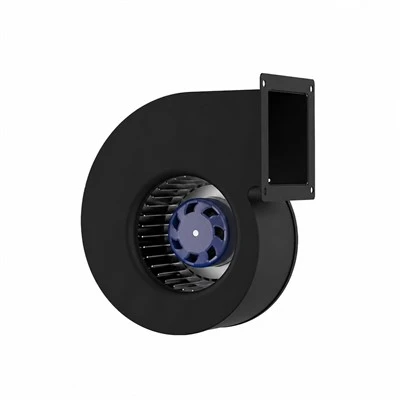
Hey there, it’s Jake from the centrifugal fan side of things—you know, the guy who spends half his week explaining why backward centrifugal fans are way better than the noisy, inefficient ones everyone’s used to. Lately, I’ve been getting a ton of DMs and calls asking the same question: “Are backward centrifugal fans actually good for negative pressure ventilation?” And yeah, I get it—negative pressure ventilation (or NPV, if we’re keeping it casual) is make-or-break for a lot of spaces right now, from hospitals and cleanrooms to growing farms and even tight construction sites. You don’t want your ventilation to fail when you need it most, so picking the right fan is non-negotiable. Let’s break this down, no fancy jargon, just real talk from someone who’s been selling these things for 7 years. Backward Centrifugal Fans

First, let’s make sure we’re on the same page about what we’re talking about here, because I’ve had way too many chats where someone mixes up fan types. Backward centrifugal fans (BCFs) have blades that curve AWAY from the direction the wheel spins—think like the back of a spoon, not a paddle for a canoe (that would be a forward-curved fan, by the way, and those are basically garbage for anything demanding). Negative pressure ventilation, in simple terms, is when you pull air OUT of a space more than you push it in. That creates a slight vacuum inside, so unfiltered, dirty air can’t leak out into adjacent areas—you want that air to go where it’s being exhausted, not where it shouldn’t. For example, in a hospital isolation room, you pull air out faster than it comes in, so all the germy air goes through HEPA filters and gets discarded, not into the hallway. In a mushroom farm, you pull humidity and mold spores out of the grow rooms to keep the crops healthy. Construction sites with hazardous materials? Same deal—keep the bad air inside the work zone, not blowing through the parking lot.
Now, let’s get to the core question: do BCFs fit here? Short answer is, mostly yes—but not all BCFs are created equal, and there are a few key reasons they work way better than other fan types for NPV. Let’s start with energy efficiency, because that’s a big one no one talks about enough. When you’re running a ventilation system 24/7 (like a hospital or a 10,000 sq ft warehouse), energy costs add up fast. I’ve had a customer switch from forward-curved fans to BCFs last year and cut their monthly electric bill by $1,200. Why? Because BCFs operate at their most efficient peak when moving high static pressure. Wait, static pressure is just the resistance air faces when it’s moving through ducts, filters, and vents—something NPV systems have a lot of, right? You’re not just pulling air through a big empty room; you’re pushing it through ductwork, maybe a filter bank, a heat exchanger, all that stuff. Forward-curved fans struggle here—they waste a ton of energy fighting that pressure, so they have to work harder, use more power, and overheat faster. BCFs? They’re designed to handle that static pressure like it’s no big deal. Their aerodynamic blade design means they move air smoothly, so less energy is wasted on friction or backpressure. For NPV, where consistent, long-run operation is the name of the game, that efficiency isn’t just a “nice to have”—it’s a must.
Next, airflow consistency. When you’re maintaining negative pressure, you can’t have the fan sputtering or cutting out because it’s overworked. NPV relies on steady, reliable air removal—even a tiny drop in exhaust rate can let contaminants leak out, which is a huge risk for healthcare settings or controlled environments. BCFs handle variable loads way better than other centrifugal fan types. A lot of our customers use variable frequency drives (VFDs) to adjust the fan speed based on how much air they need—like, a hospital might crank it up during patient procedures and dial it down when it’s quieter at night. BCFs pair perfectly with VFDs because their efficiency stays high across a wide range of speeds, not just at full blast. I had a client in a biotech lab tell me their old forward-curved fan would dip to 50% efficiency when running at half speed, but their new BCF from us stays at 85% efficiency even at 30% speed. That consistency is non-negotiable for maintaining that stable negative pressure—you don’t want the pressure to swing from -0.5 Pascals to -1 Pascal (the standard for most isolation rooms) because your fan can’t handle variable speeds.
Another big one: durability and low maintenance. When a fan is pulling air through filters, that air is often dusty, humid, or even has particulate matter—think construction sites, grain silos, or even public restrooms with high moisture. BCFs’ backward blade design means they don’t trap as much debris as other fan types. Forward-curved blades have those deep, curved pockets that catch dust and mold, which makes the fan unbalanced over time, causes noise, and forces you to take it apart to clean it every few months. I’ve had customers tell me their old forward-curved fans needed deep cleaning every 2 weeks, but our BCFs only need a quick wipe-down every 6 months. That’s less downtime, less labor cost, and fewer parts to replace. For NPV systems, which are often in hard-to-reach places (like ceiling spaces of a hospital or remote mushroom farms), maintenance is already a headache—BCFs make it way less of one.
Wait, but hold on—let’s not pretend BCFs are perfect for every NPV job. I get emails sometimes from guys who say, “I tried a BCF and it sucked for my project,” and nine times out of 10, they picked the wrong size or model. Let’s talk about the limits here. If you need a super low-pressure NPV system—like a small bathroom exhaust fan, for example—BCFs are overkill. Their high static pressure design means they’re more expensive upfront than tiny inline fans, and you don’t need that extra power for a small space. But if you’re dealing with anything larger than a 1,000 sq ft space, or a system that has multiple ducts, filters, or heat recovery units, BCFs are the way to go. Another caveat: if you’re moving air that has really heavy, large particulates (like metal shavings from a machine shop or large grain particles), BCFs can still work, but you might want to opt for a version with a dust ejection hole in the fan wheel to prevent buildup. We offer those for industrial clients, and they work like a charm.
Let me give you a real example, not just sales fluff. Last year, we worked with a new hospital in Chicago that was building 12 negative pressure isolation rooms for COVID and future pandemic use. They initially quoted forward-curved fans because they were cheaper upfront, but our team helped them run the numbers. Over a 10-year lifespan, the BCFs would cost them $21,000 less in energy and maintenance than the forward-curved ones. Plus, they tested the airflow consistency—during a 72-hour continuous run (which is required for NPV system certification), the BCFs maintained a pressure of -0.55 Pascals, right in the required range, while the forward-curved fans dropped to -0.3 Pascals after 24 hours, which is too low and would have let contaminants leak out. The hospital went with our BCFs, and they haven’t had a single maintenance call in the past 10 months. That’s exactly the kind of result we’re after.
Another example: a large-scale commercial mushroom farm in Pennsylvania. They use NPV to control humidity and keep mold spores from spreading between grow rooms. They were using axial fans before, but those were noisy, inefficient, and couldn’t maintain consistent negative pressure when the rooms were fully loaded with mushrooms. They switched to our backward centrifugal fans with VFDs, and now their energy bill is down 22%, their mold contamination rate dropped by 18% (because the airflow is steady), and they don’t have to replace fan bearings every year like they did with axial fans. That’s the real-world impact BCFs can have for NPV.
Wait, let’s also address a common myth I hear: “Backward fans are too expensive.” Yeah, upfront, a BCF might cost 20-30% more than a forward-curved or axial fan, but that’s a short-term cost for long-term savings and reliability. For NPV systems, downtime isn’t an option—if your ventilation fails, you’re looking at code violations, health risks, or even lost revenue. For example, if that hospital’s fans had failed, they would have had to move patients to other rooms, which is dangerous and costly. The extra money spent on BCFs is a small investment for peace of mind.
So, putting it all together: are backward centrifugal fans suitable for negative pressure ventilation? Absolutely—for most commercial, industrial, and healthcare NPV applications, they’re actually one of the best options out there. Their high static pressure efficiency, consistent airflow, durability, and low maintenance make them perfect for the continuous, demanding operation NPV requires. The only times they’re not the right pick are tiny, low-pressure jobs where a smaller, cheaper fan will do the trick.
Now, if you’re in the market for an NPV system and trying to figure out if BCFs are right for your space, or you have questions about sizing, VFD compatibility, or maintenance, I’m here to help. We’ve worked with hospitals, farms, construction companies, labs, and all kinds of other clients to set up NPV systems that actually work. Just reach out to us to talk through your needs—no sales pitch, no pressure, just honest advice. Let’s make sure your ventilation system is reliable, efficient, and does exactly what it’s supposed to.
Backward Centrifugal Fans References
- ASHRAE Handbook: HVAC Systems and Equipment, Chapter 18 – Fans, American Society of Heating, Refrigerating and Air-Conditioning Engineers, Inc.
- Fan Application Guidelines for Negative Pressure Ventilation, Industrial Ventilation: A Manual of Recommended Practice, American Conference of Governmental Industrial Hygienists (ACGIH)
- Efficiency Analysis of Centrifugal Fans for Continuous Industrial Ventilation, Journal of HVAC Research, Vol. 26, No. 5, 2020
- Performance Comparison of Backward-Curved vs. Forward-Curved Centrifugal Fans for Static Pressure Applications, Proceedings of the International Conference on Energy and Sustainability, 2021
Suzhou Blauberg Motoren Technology Co., Ltd.
Suzhou Blauberg Motoren Technology Co., Ltd. is one of the most professional backward centrifugal fans manufacturers and suppliers in China, featured by quality products and good service. Please rest assured to buy bulk customized backward centrifugal fans from our factory. Welcome to contact us for quotation.
Address: No. 8, Zhu Street, Industrial Park, Suzhou, JiangSu, China
E-mail: Andie@blauberg.cn
WebSite: https://www.blaubergmotors.com/
