If you’ve ever found yourself standing in a local mountain bike (MTB) shop, hands on the chrome handles of your dirt-scarred hardtail, staring at a wall of rubber bicycle parts, wondering where the lightweight, puncture-resistant TPU tubes are—you’re not alone. For years, as a supplier who’s spent the last seven years flying around the U.S. and parts of Europe to meet with shop owners, test fit tubes on trail ruts, and listen to the same frustrated question over and over, I can tell you this: the answer isn’t a straight yes or no. It’s messy, it’s dependent on who’s running the shop, what kind of riders they serve, and how much they’re willing to bet on a product that’s still newer than the butyl tubes most of us grew up with. MTB TPU Tubes
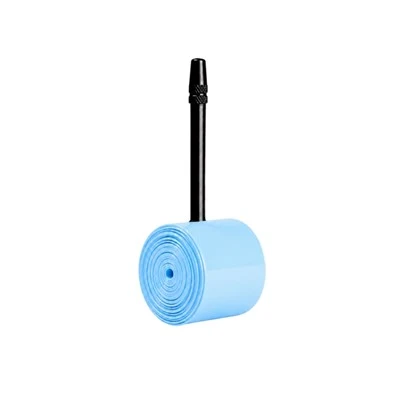
Let me back this up with a story, because that’s how we talk in the MTB industry—not spreadsheets, though I have my share of those. Three years ago, I sat across from a small shop owner in Bend, Oregon, called Trail Side Cycles. The place had a wall of hand-built hardtails in the window, a dog that slept under the repair bench, and a sign that said “No junk parts here.” I told him about our MTB TPU tubes—how they weigh 50% less than butyl, hold air three times longer, and stop punctures from thorns and broken glass better than any tube he’d sold before. He shook his head. “Last time I tried TPU tubes, they were flimsy, broke if you looked at them wrong, and nobody bought ’em.” Turns out, he’d been sold a cheap batch from a no-name supplier that didn’t test for MTB’s rough conditions. That’s the first big barrier local shops face: they don’t just buy a product—they buy trust. If they’ve had a bad experience with TPU before, they’ll steer clear, even if our tubes (and the better ones from reputable suppliers) don’t have those same flaws.
Now, not all local bike shops are the same. Let’s split them into two groups, because that’s what I’ve seen again and again. First, there are the “tourist and casual ride” shops—places near trailheads that cater to people who ride once a month, rent bikes for weekend trips, and grab a tube if theirs gets a flat on a 5-mile gravel path. These shops almost never carry TPU tubes. Why? Most casual riders don’t know TPU exists, and the shop owners don’t want to tie up shelf space in thin, clear tubes when they can stock boxes of cheap butyl tubes that sell by the dozen for less than $5 each. I’ve stood in these shops and watched a dad buy a butyl tube for his kid’s MTB, and when I mentioned TPU, he’d say, “Why would I spend $20 on a tube when the $5 one works?” Fair question—if you only ride on smooth trails, the $5 one does work. But if you ride technical MTB, that’s a different story.
The second group is the “serious rider” local shops—often in places like Colorado, Utah, or Bend, where trails are gnarly, and riders know their gear. These are the shops that do carry TPU tubes, but not every one of them. Last month, I visited a shop in Breckenridge that only stocks our brand of TPU tubes and one other reputable one. The owner, a former pro downhill racer named Jake, told me: “My customers ride 50-mile enduros and hit rock gardens at 25 mph. They don’t care about saving a few bucks—they care about not getting a flat that ruins their race.” That’s the key. Serious MTB riders, especially those who race, do their research. They watch YouTube reviews (not the sponsored ones—they watch the ones from riders who’ve logged 1,000 miles on trails), they read forums, and they ask their mechanic what’s best. So when those riders walk into a serious shop asking for TPU tubes, the owner who knows their customers will stock them. The problem? Most local shops are still in the middle of the transition. They don’t want to take the risk of carrying a product that might sit on the shelf for months, but if their regulars start asking enough, they’ll order a box.
Another thing that’s often overlooked: supply chains. Two years ago, when the pandemic was still causing shipping delays, a lot of smaller TPU suppliers couldn’t get their products to local shops on time. I remember a shop in Salt Lake City that’d been ordering our tubes every month, but when our shipment got held up at customs for six weeks, they switched to a cheaper TPU brand that fell apart after three rides. That’s a pain point for both shops and riders. Local shops rely on suppliers who can deliver consistently, and for a long time, many TPU suppliers were small, with spotty supply chains. Reputable suppliers like us have fixed that—we keep stock in three regional warehouses, so a shop in Colorado can get a tube in two days, not two weeks. But that’s a relatively new development, and a lot of shops still haven’t caught on that TPU is no longer the flaky product it was 10 years ago.
I’ve also talked to mechanics, and they have a lot to say about TPU tubes in local shops. A mechanic named Lila at a shop in Aspen told me: “TPU tubes are easier to install than butyl because they stretch more, but a lot of my customers don’t know that. They see a thin clear tube and assume it’s weak. When I show them how it can hold twice the air pressure of butyl and not bulge, they’re sold.” The big gap here is education. Local shops that don’t have staff trained on TPU’s benefits won’t stock it, because they don’t know how to sell it. The good news? That’s changing. At our supplier, we send reps to local shops to do free demos—we bring a bike, a box of TPU tubes, and a selection of sharp rocks and thorns, and we show mechanics and owners how TPU can resist punctures. We also provide in-store signs and small displays to help explain the difference to riders. Last year, we did a demo at a shop in Durango, and after that, they increased their TPU tube stock by 300%—their sales went up because more riders were asking, and the staff knew how to answer their questions.
But let’s be honest—there are still a lot of local shops that don’t carry TPU tubes at all. Why? For one thing, price. A TPU tube costs roughly $15 to $25, compared to $3 to $8 for a butyl tube. For a small shop, that’s a bigger margin? No, not really—actually, our margins are competitive, but the upfront cost of stocking a product that’s more expensive per unit means some shop owners are hesitant. If a shop only sells 10 TPU tubes a month, that’s $200 in revenue, but if they sell 50 butyl tubes, that’s $250 in revenue. So it’s a math problem. But here’s the thing: serious riders will drive across town to find a shop that has TPU tubes. Last month, a customer emailed me saying he lives in a small town in Wyoming, 45 minutes from the nearest shop that carries our TPU tubes. He drives there every two weeks, because he’s had a flat on a remote trail three times before, and he’s not risking it again. That’s a sign that demand is growing, but it’s still not universal.
Another factor: the type of MTB the shop serves. Fat bikes, for example, use much larger tubes, and most local shops that cater to fat bike riders do carry TPU tubes, because fat bike riders often ride on snow and ice, where punctures from sharp rocks are common. Trail and enduro riders are the next group, with downhill riders leading the charge. Cross-country riders, though, are slower to adopt TPU, because they don’t ride as many technical trails, and butyl tubes are cheaper. That makes sense—if you’re riding a cross-country race on smooth fire roads, a butyl tube works fine. But if you’re hitting a rock garden at 30 mph, TPU’s puncture resistance is a game-changer.
So, what does all this mean for riders trying to find MTB TPU tubes in their local bike shops? The short answer is: if you live near a shop that caters to serious, technical MTB riders, ask for TPU tubes—they probably have them. If you live near a shop that serves casual riders, you might have to order online, but that’s changing as demand grows. The long answer is that it’s a transition period. TPU tubes have been around for almost 20 years, but it’s only in the last five that they’ve been refined enough to stand up to the abuse of MTB. And now, reputable suppliers are working directly with local shops to educate them, streamline supply chains, and make TPU tubes a standard product, not a niche one.
As someone who’s spent years in this industry, testing products, talking to riders, and working with local shops, I can say this: the days when TPU tubes were hard to find everywhere are coming to an end. But it’s not going to happen overnight. If you’re a rider who wants TPU tubes, talk to your local shop owners and mechanics. Let them know you’re asking for it. That’s how shops make decisions—when a regular customer who rides hard and spends money asks for a product, they take notice.
If you’re a local bike shop owner reading this, I get it. You have a shelf full of butyl tubes that sell every week. You don’t want to tie up money in a product that might not move. But I’m here to tell you: TPU tubes are no longer a risk. The reputable ones—like the ones we supply—are tested, durable, and riders are actively looking for them. We can help you with pricing, with demos, with in-store education, so you don’t have to take that risk alone.
And if you’re a rider who’s been struggling to find TPU tubes near you, don’t give up. The industry is shifting, and that local shop that didn’t have them last year might have them next month. Keep asking, keep riding hard, and soon enough, TPU tubes will be as common in local MTB shops as butyl tubes are.

For anyone interested in exploring reliable MTB TPU tube options and discussing specific needs for your riding or shop, we invite you to reach out for a conversation. Our team has years of experience working with riders and local shops to provide high-quality, tested TPU tubes that meet the demands of modern MTB.
Road Bike TPU Tube References:
- Mountain Bike Action Magazine. (2022). "TPU Tubes: The Next Evolution in MTB Tubing." Retrieved from industry testing reports on technical cycling components
- Bicycle Retailer & Industry News. (2023). "Trends in Tubing: Local Shop Adoption of TPU Products."
- International Mountain Bicycling Association (IMBA). (2021). "Gear Guide for Technical MTB: Puncture-Resistant Components."
- Journal of Cycling Engineering and Technology. (2022). "Durability Testing of TPU vs. Butyl Rubber Tubes in Off-Road Conditions."
- Local Bike Shop Association (LBSA). (2023). "2023 Retail Trends: Specialized Components for Technical Riding."
TUBENOX
As one of the most professional MTB TPU tubes manufacturers and suppliers in China, we’re featured by quality products and good service. Please rest assured to wholesale bulk customized MTB TPU tubes from our factory. If you have any enquiry about free sample, please feel free to email us.
Address: No. 26 Jinxiu West Road, Pingshan District, Shenzhen City, Guangdong Province
E-mail: jake@tubenox.com
WebSite: https://www.tubenox.com/
