Let’s be real for a sec—when we all gripe about old-school, blurry rearview mirrors and blind spots that make parallel parking feel like a high-stakes video game, those little rearview mirror cameras? They’re the unsung heroes of modern driving. I’m the guy who’s been supplying these gadgets for, like, 8 years now, and I’ve seen every angle of them: the way they save folks from fender benders, the tech that makes them work, and… the huge, under-talked-about privacy stuff that keeps me up at night. Car Rearview Mirror
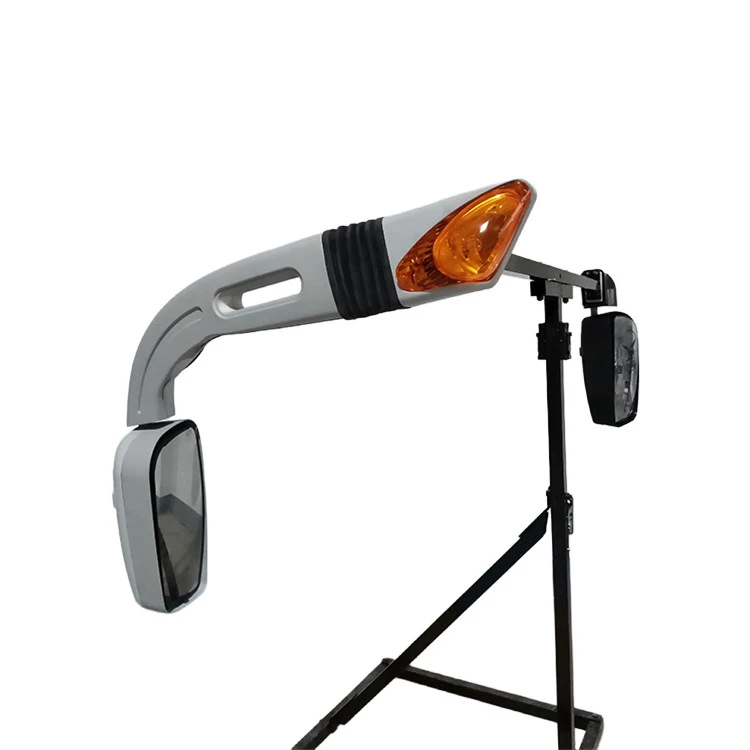
Most drivers think a rearview mirror camera is just a backup for that clunky old mirror that warps your side vision, right? Turn on your car, it kicks on, shows you what’s behind you on a tiny screen—no need to twist your neck. But here’s the thing: most of these cameras don’t just film what’s directly behind your license plate. They’re wide-angle, 120+ degrees usually, because manufacturers need to catch every cyclist, pedestrian, or rogue shopping cart that’s darting into your path. That means they’re not just pointing at your bumper. They’re pointing at your driveway, the street behind your house, the parking lot at the grocery store, even parts of the sidewalk you might not notice until it’s too late. And once that footage is captured? Where does it go? That’s the privacy question that’s way bigger than the “did I hit that fire hydrant” debate.
First off, let’s talk about the data hoarding that’s baked into so many of these cameras. A lot of the budget models I see get thrown at rental fleets and cheap used car upgrades come with built-in storage—usually a tiny SD card that only holds like 12 hours of footage before it overwrites. But the higher-end ones, the ones I push to my wholesale clients because they’ve got better night vision and less glare? A bunch of them are Wi-Fi connected. Like, synced to your phone, your car’s infotainment, sometimes even the cloud. Yeah, cloud storage is convenient—you can pull up that time you saved a kid from chasing a ball in 10 seconds flat, no digging for an SD card. But if that footage is stored in the cloud, who has access to it?
I had a client last year, a small used car dealership out in Chicago, who told me one of their customers had a weird issue: the cloud footage from his rearview camera was showing up in a random Facebook group for people in their neighborhood. Turned out, the camera’s default setting was to auto-upload “interesting” clips (read: anything that moved faster than 5 mph) to a third-party analytics company that sold the data to ad firms. The customer had no idea that was happening. He was just trying to back out of his driveway without hitting a mailbox. That’s the stuff that makes me cringe—like, I’m selling a safety tool, not a surveillance device, but half the time, the fine print is so tiny no one reads it.
Then there’s the street-level surveillance angle that’s creeping up. I know, I know—you’ve got your dashboard cam too, right? But a rearview mirror camera is mounted dead center, at eye level, not low down like a dashboard cam. So if you’re parked on a residential street, it’s capturing license plates of every car that drives by, faces of people walking their dogs, the kids playing in the front yard down the block. Some cities have already tried to pass laws that ban or limit private dash cam footage being shared publicly, but rearview mirror cameras are a whole new loophole. Wait, did I mention some newer models have facial recognition built in? Yeah, I saw a prototype at a tech show last year that could identify pedestrians by their face to make the camera’s alerts more accurate. Imagine that: your rearview mirror camera’s not just filming, it’s logging every person who walks past your car, and sending that data to… well, whoever the company partners with. That’s not a safety feature. That’s data mining.
What about when those cameras break, or the car gets sold? Let’s say you upgrade your rearview mirror camera after 3 years, and the old one goes in the trash, or you sell your car to a new driver. If the SD card isn’t properly erased, all that footage—of your home address, your daily commute, your grocery store runs—ends up in the hands of whoever gets your old camera. I had another client, a parts recycler in Detroit, who told me they found SD cards in old rearview mirror cameras they were scrapping that had footage of people’s homes, their workplaces, even their kids getting dropped off at school. No one had formatted the card. No one thought about it. That’s a huge vulnerability, and most manufacturers don’t even give you a simple tool to wipe the footage before you dispose of the device.
Don’t get me wrong—rearview mirror cameras aren’t all bad. I’ve seen them prevent so many accidents: a mom backing up and almost hitting a toddler, a driver swerving to miss a biker, a guy who thought he was clear and didn’t see a motorcycle coming. The safety benefits are real, and that’s why I’ve been in this business, not selling something useless. But the privacy stuff is a ticking time bomb, and it’s only going to get worse as AI gets better at processing that footage.
Wait, let’s talk about the legal side too, because that’s where things get messy. Right now, there’s no universal rule for rearview mirror camera data. In the US, it’s a hodgepodge of state laws: California has strict privacy rules for biometric data (like the facial recognition stuff), Texas is pretty lax. In the EU, GDPR applies, but only if the data is being processed for commercial purposes. So a small driver using a budget camera with cloud storage might not even realize they’re breaking any laws, let alone that their data is being shared. And for someone like me, supplying these cameras to shops across the country, I’m stuck in the middle: I want to offer a good product, but I also need to make sure my clients aren’t unknowingly selling or passing around data that’s illegal.
So what’s the fix here? I’ll tell you what I push all my clients to do, and what I’m starting to build into the cameras I source: first, default to local storage only. No cloud, no auto-upload, unless the user explicitly turns it on. Second, make the privacy settings super easy to find—no scrolling through 10 menus to turn off “motion detection” that’s uploading to a server. Third, built-in auto-formatting for SD cards when the camera is retired, so no one has to remember to do it themselves. And fourth, be transparent about what data is collected, who has access to it, and for how long. I had one manufacturer I work with recently add a little pop-up on the screen every time you turn on the camera that says “This device does not collect or share personal data without your permission.” That’s the kind of transparency that actually builds trust.
Let’s be real, though. Not every supplier cares about that. A lot of companies cut corners to sell cheaper cameras, and they don’t care about the privacy stuff as long as they’re making a buck. That’s why it’s so important for drivers to ask questions before they buy: Where is this camera’s footage stored? Can I turn off cloud access? Can I delete footage remotely? Can I opt out of any data collection? And for shop owners like my clients, when they’re looking for a rearview mirror camera to stock, they need to ask those same questions, not just pick the cheapest one.

At the end of the day, rearview mirror cameras are supposed to make driving less stressful, not turn every driver into a walking surveillance system. I’ve been in this game long enough to know that tech only works if it’s useful, not creepy. If you’re a shop owner, a driver, or anyone looking to get a rearview mirror camera that’s safe for you and your neighbors, hit us up for a chat. We can walk through our privacy features, make sure you’re getting a camera that actually keeps you safe, not anyone else’s data.
Functional Rearview Mirror References:
- Electronic Frontier Foundation. (2023). “Surveillance by the Mile: How Vehicle Cameras Endanger Privacy.”
- National Highway Traffic Safety Administration. (2022). “Rearview Safety Technology: Current State and Future Privacy Considerations.”
- European Data Protection Board. (2021). “Guidelines on the Processing of Biometric Data in Road Transport and Vehicle Systems.”
Shanghai Xinmao Automotive Technology Co., Ltd.
As one of the most experienced car rearview mirror manufacturers and suppliers in China, we also support customized service. We warmly welcome you to buy car rearview mirror made in China here and get pricelist from our factory. For price consultation, contact us.
Address: No.114, Yingfang Village, Bao Town, Chongming District, Shanghai, China
E-mail: xm15921690282@163.com
WebSite: https://www.xinmaoauto.com/
